Tracking Mental Effort Variations Across Slot Machine Rotations, Poker Hand Sequences, and Sports Event Wagering
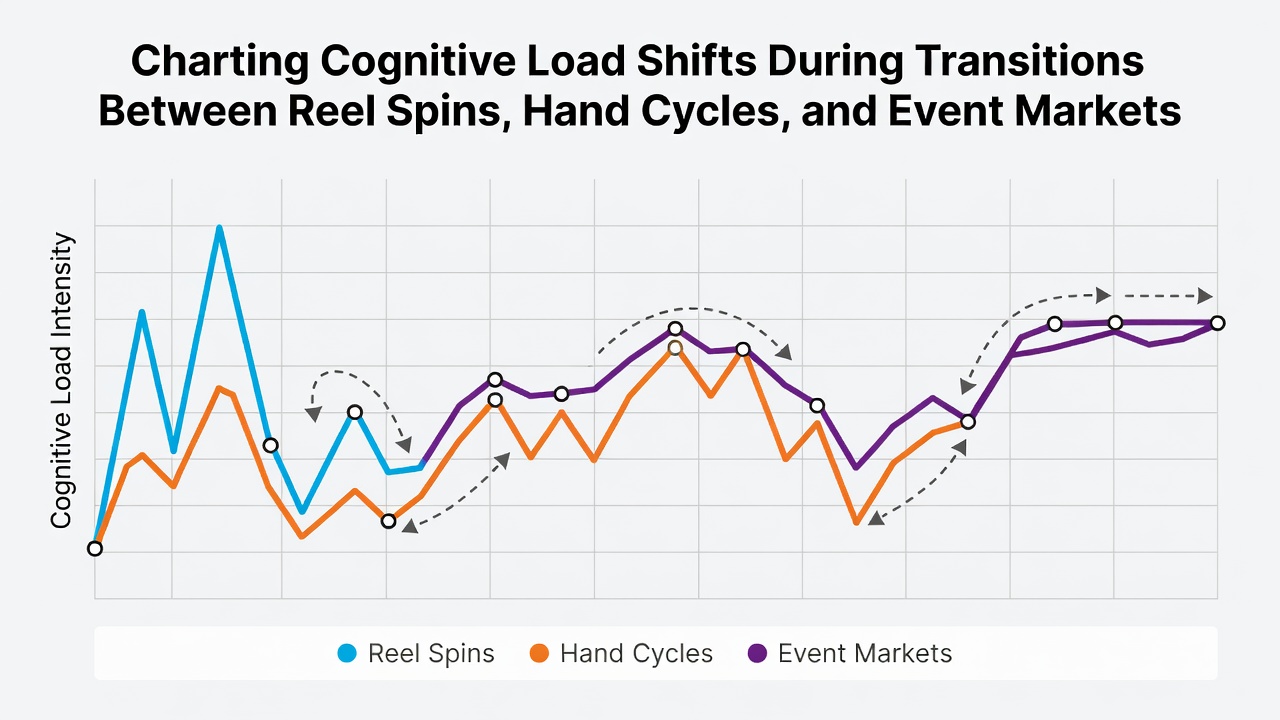
Operators and researchers continue to examine how mental workload changes when players move between reel-based games, card sequences, and outcome-based event markets; studies in this area draw on established cognitive frameworks to map attention demands, decision pacing, and memory retention across formats. Data collected from integrated resort environments show distinct load profiles that emerge during these switches, particularly when session durations extend beyond thirty minutes and multiple game types appear in sequence.
Defining Cognitive Load in Multi-Format Gaming Settings
Cognitive load refers to the total mental resources required to process information, maintain strategies, and respond to game stimuli; in gambling contexts this encompasses visual pattern recognition on reels, probabilistic calculations during hand cycles, and real-time odds assessment within event markets. Researchers at institutions focused on behavioral economics have applied dual-task paradigms to quantify these demands, revealing that reel spins typically impose lower intrinsic load due to repetitive mechanics while hand cycles elevate germane load through memory of prior outcomes and opponent modeling.
Event markets introduce extrinsic load tied to external variables such as team statistics and live updates, which players must integrate with bankroll constraints. Observers note that transitions amplify these effects because residual processing from one activity lingers into the next, creating temporary interference that delays optimal engagement.
Observed Shifts During Activity Changes
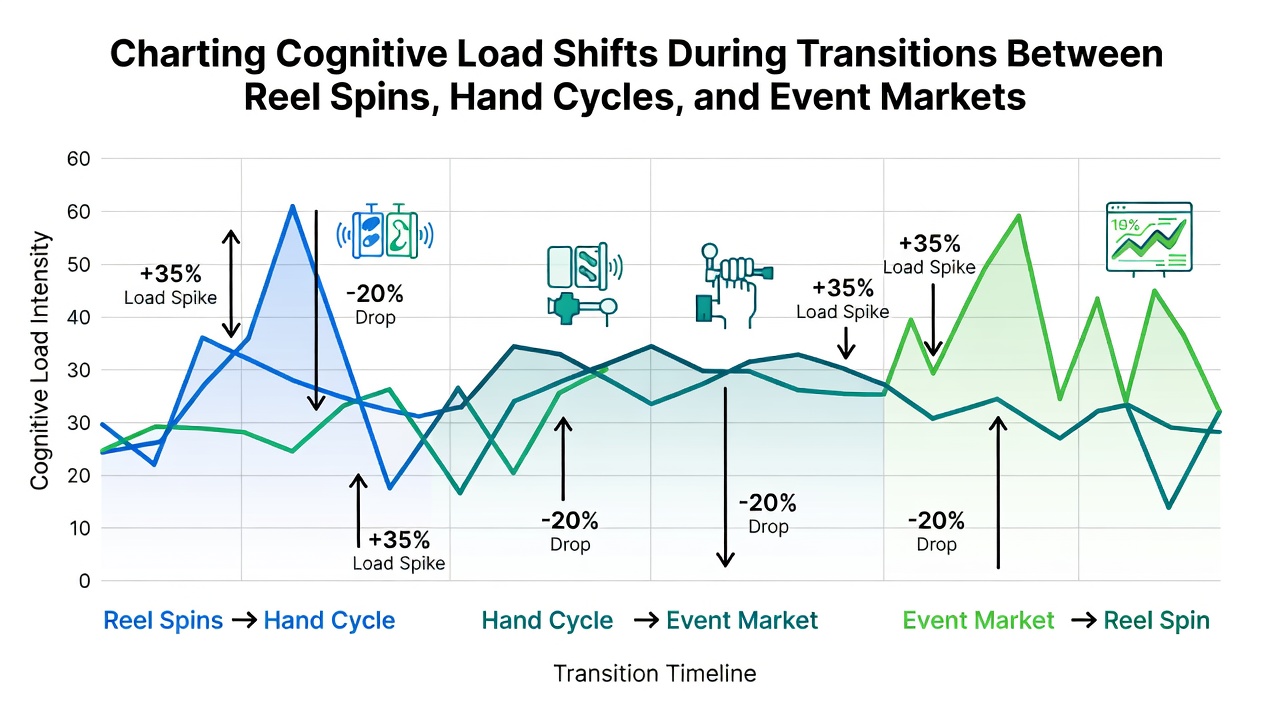
Measurements taken in controlled casino simulations indicate that moving from reel spins to hand cycles produces an initial spike in working memory activation lasting approximately ninety seconds, after which load stabilizes as players recalibrate to sequential decision points. The opposite direction, from hands to reels, often shows a quicker decay in load because the simpler stimulus-response pattern of slots requires less sustained attention once the first few spins complete.
Shifts involving event markets display more variable patterns; sports wagering lines demand continuous monitoring of changing probabilities, so players entering from reels frequently exhibit elevated heart-rate variability and slower response times on initial bets. Those who've studied these sequences report that the most pronounced load elevation occurs when all three formats appear within a single sixty-minute window, particularly if bankroll reallocations coincide with the switches.
Findings from Mid-2026 Monitoring Programs
During June 2026, several multi-state operators implemented voluntary tracking protocols that paired eye-movement data with self-reported effort scales across slot areas, poker rooms, and sportsbooks; preliminary aggregates indicate average load increases of 18 percent during reel-to-event transitions and 12 percent during hand-to-reel moves. These figures align with earlier laboratory work but add granularity from live environments where ambient noise and social cues further modulate attention.
One analysis conducted across properties in the northeastern United States found that players who alternated formats more than four times per session demonstrated greater variability in decision latency, suggesting cumulative load accumulation rather than simple additive effects. Australian research centers tracking similar metrics through app-based diaries have corroborated these trends, noting consistent elevation when live sports markets overlap with table game sessions.
Practical Implications for Session Design
Venue operators have begun adjusting layout and digital interfaces to reduce transition friction; examples include clustered terminal placements that keep reel and table stations within visual range and mobile prompts that summarize pending event odds without requiring full attention shifts. Data from these adjustments show modest reductions in reported mental fatigue, though long-term retention of performance gains remains under study.
Training materials developed for floor staff now incorporate guidance on recognizing signs of elevated load, such as prolonged hesitation at terminals or repeated rule clarifications, allowing interventions that maintain engagement without disrupting play flow. Regulatory bodies in multiple jurisdictions have referenced these approaches when reviewing responsible gaming standards, emphasizing evidence-based design over prescriptive limits.
Future Measurement Approaches
Emerging sensor technologies, including wearable EEG headbands and refined pupillometry tools, promise finer resolution of load dynamics during real-time switches; pilot programs scheduled for late 2026 aim to integrate these readings with transaction logs to identify high-load transition points across larger player cohorts. Academic partnerships with gaming associations continue to refine models that separate intrinsic game demands from transition-specific costs, providing clearer targets for interface improvements.
Continued collection of cross-format data will clarify whether certain sequences consistently produce lower aggregate load, information that could inform both player education modules and operational scheduling of promotions that encourage format variety.
Conclusion
Evidence compiled to date demonstrates measurable differences in cognitive demands when players move among reel spins, hand cycles, and event markets, with transition intervals representing distinct periods of elevated workload. Ongoing monitoring through June 2026 and beyond supplies operators and researchers with expanding datasets that support targeted adjustments to environment and technology, ultimately aligning game sequencing with documented patterns of mental resource use.